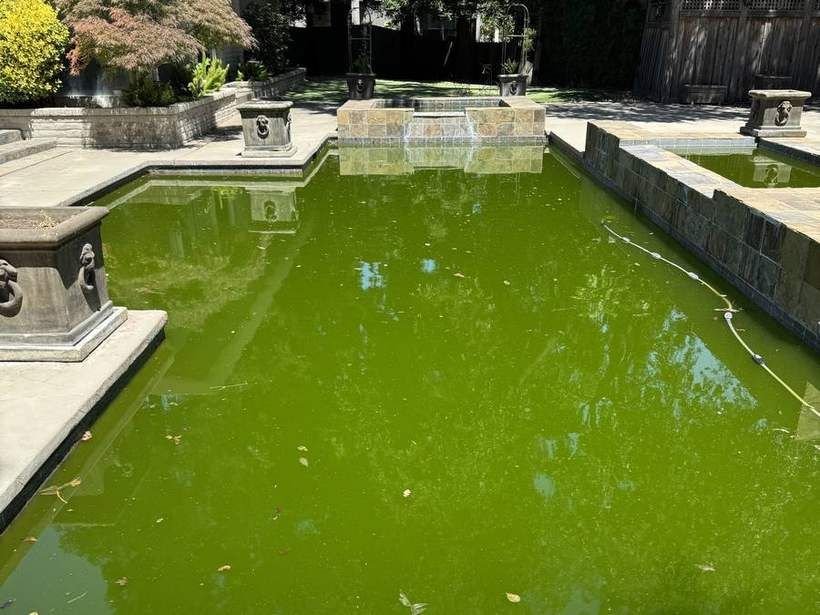
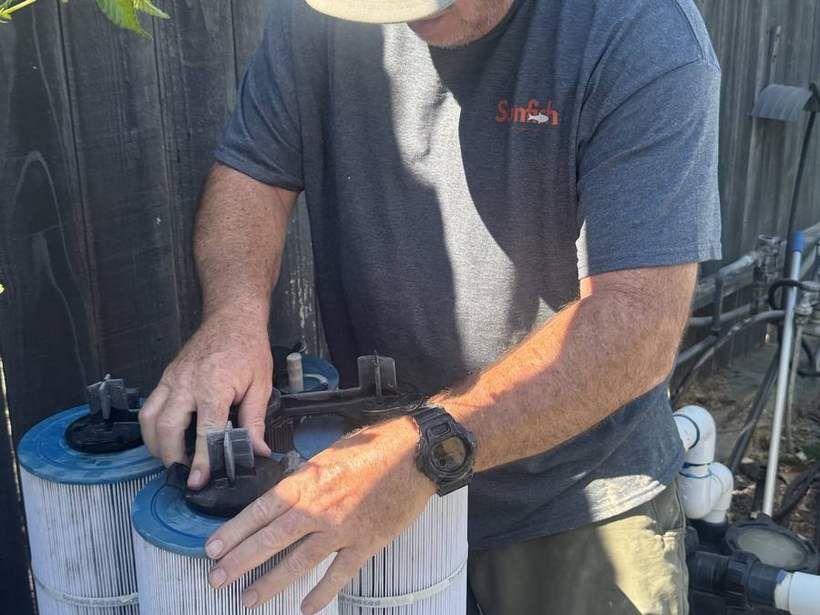
Get your pool ready for leaf season by clearing and inspecting the skimmer and pump baskets, cleaning the filter before the drop starts, tightening up water chemistry while the water is still warm, and adjusting pump run time so the skimmer keeps pulling all day. In the Sacramento area the heavy drop from valley oaks, elms, sycamores, and liquidambars runs from late September through December, and a pool that goes into it clean and balanced is far easier to keep that way than one that is already behind.
When does leaf season actually start in Sacramento?
Sacramento calls itself the City of Trees for a reason, and the pool side of that reputation shows up every fall. The first real drop usually comes with the first north wind in late September or early October. Valley oaks and cork oaks drop acorns and small leathery leaves for weeks. Sycamores and London planes dump large leaves in a few big waves. Liquidambars hang on until the first hard cold snap, then let everything go at once, along with the spiky seed balls that jam skimmer throats. Elms in the older neighborhoods drop small leaves steadily from October into December.
The City of Sacramento runs its curbside leaf collection program from early November into February, which tells you how long the drop lasts in the older tree-canopy neighborhoods. Your pool sees the leaves before the street does, and it has no claw truck coming by.
If you are in
Carmichael under mature valley oaks, in
East Sacramento with the Fab 40s canopy, or in
Land Park with its big elms, plan on two to three months of daily leaf load. Newer neighborhoods get less, but a single mature tree next door is enough to keep a skimmer basket full.
Why do leaves matter so much for a pool?
Leaves are not just a cosmetic problem. Three things happen when they sit in the water.
First, they stain. Oak, sycamore, and liquidambar leaves release tannins as they break down. A pile of leaves left on plaster for a week leaves a brown outline that does not brush off. On older plaster that is already rough, the stain can be permanent without an acid treatment.
Second, they feed algae. Decomposing leaves add phosphates and organic load to the water. Phosphates are food for algae, and organic load burns through chlorine. A pool that held chemistry easily in August can go from clear to cloudy in a few days once the leaf load starts, because the chlorine is being spent on debris instead of on sanitizing.
Third, they choke circulation. A full skimmer basket stops pulling from the surface. A full pump basket starves the pump of water, and a pump that runs starved will overheat and lose its seal. Leaves that make it past the baskets load up the filter, pressure climbs, and flow drops. Every one of those steps makes the next one worse, which is why a pool can look fine on Monday and be green by Friday in October.
What should you check before the drop starts?
The work is mostly about making sure the pool can handle a heavy load without you standing over it every day.
Start with the skimmer. Pull the basket and look for cracks in the bottom or the rim. A cracked basket lets leaves through to the pump. Check the weir, the flapping door at the mouth of the skimmer. It should swing freely and settle closed when the pump is off. A missing or stuck weir lets leaves float back out and stops the skimmer from pulling from the surface. Weirs and baskets are cheap parts, and September is the time to replace them.
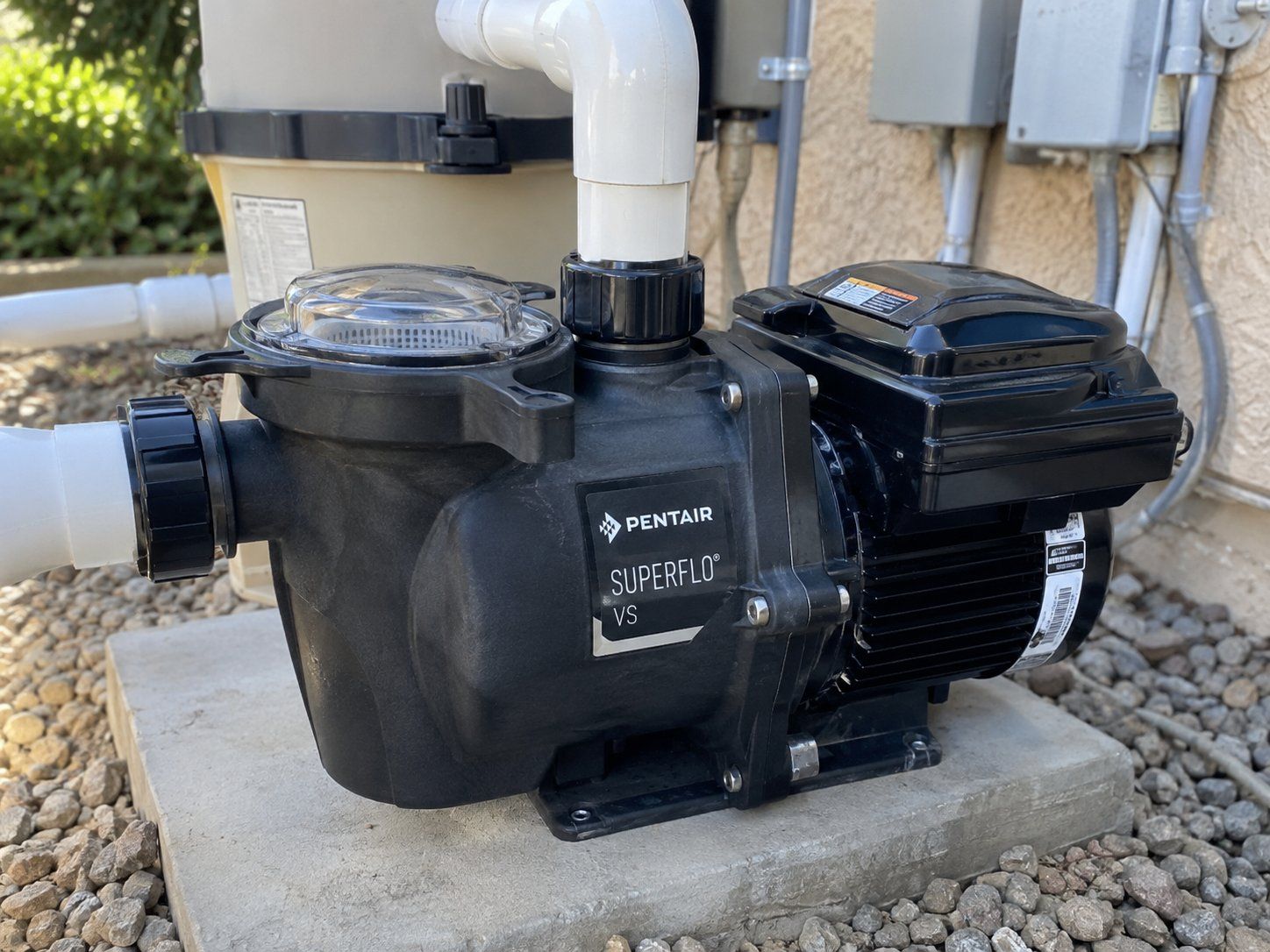
Next, the pump basket. Pull it, rinse it, look for the same cracks. Check the pump lid o-ring, because you will be opening that lid a lot more often in the next three months and a dry or flattened o-ring lets air in and kills prime.
Then the filter. If your cartridge filter has not had a full teardown clean since spring, do it now, before the leaves. A cartridge that starts fall already half loaded will hit high pressure in weeks. If you have a DE filter, backwash and recharge. If you have a sand filter, backwash and consider whether the sand is due for replacement. Going into leaf season with a clean filter is the single biggest thing you can do to stay ahead.
Finally, walk the equipment pad and look for anything that was marginal in summer: a pump that struggles to prime, a valve that sticks, a heater that threw a code in June. Fall is when marginal equipment fails, because it is working harder. Our
pool repair page covers what we handle and how to send a photo of the pad for a quote.
How should water chemistry change in fall?
The water is still warm in September, often in the high 70s, and warm water plus organic load is the algae recipe. Test twice a week during the drop, not once.
Keep free chlorine at the upper end of the normal range. In summer you may have been holding 2 to 3 ppm. During heavy leaf drop, 3 to 4 ppm gives you a cushion for the days you cannot get to the pool.
Watch pH. Decomposing leaves tend to push pH down at first, then the acidic load fades and pH drifts back up. Keep it in the 7.4 to 7.6 range so chlorine stays effective.
Test phosphates at the start of fall and again mid-season. If they are climbing, a phosphate remover takes the food away from the algae and makes your chlorine go further.
Shock after any big leaf event. If a wind storm dumps a layer of leaves overnight, net them out, brush, and shock that evening rather than two days later.
If the pool has already gone green, the fix is the same as in summer and we wrote it up in
how to clear a green pool in Sacramento.
Should the pump run more or less in fall?
Both. Cooler water needs less filtration, so you can start trimming run time in October. But leaf season is the one time of year the skimmer needs to pull for most of the daylight hours, because leaves that stay on the surface get netted and leaves that sink get brushed and vacuumed. The practical answer for most Sacramento pools is to keep the pump running during daylight through the heavy drop, then cut back in December once the trees are bare. If you have a variable speed pump, run it long at a low speed. Low speed keeps the skimmer pulling all day for a fraction of the electricity of a single speed pump. If you are still on a single speed pump, California rules mean the replacement will be variable speed anyway, and we explain those rules in
California variable speed pool pump rules, explained.
What tools make leaf season easier?
A leaf rake net, the deep bag kind, moves ten times the leaves of a flat skimmer net. A leaf canister on the suction cleaner line catches leaves before they reach the pump basket. A skimmer sock inside the basket catches fine debris and pollen. Robot cleaners with large debris baskets handle leaves well, and we compared them in
how to choose a robotic pool cleaner in Sacramento.
What does weekly service do during leaf season?
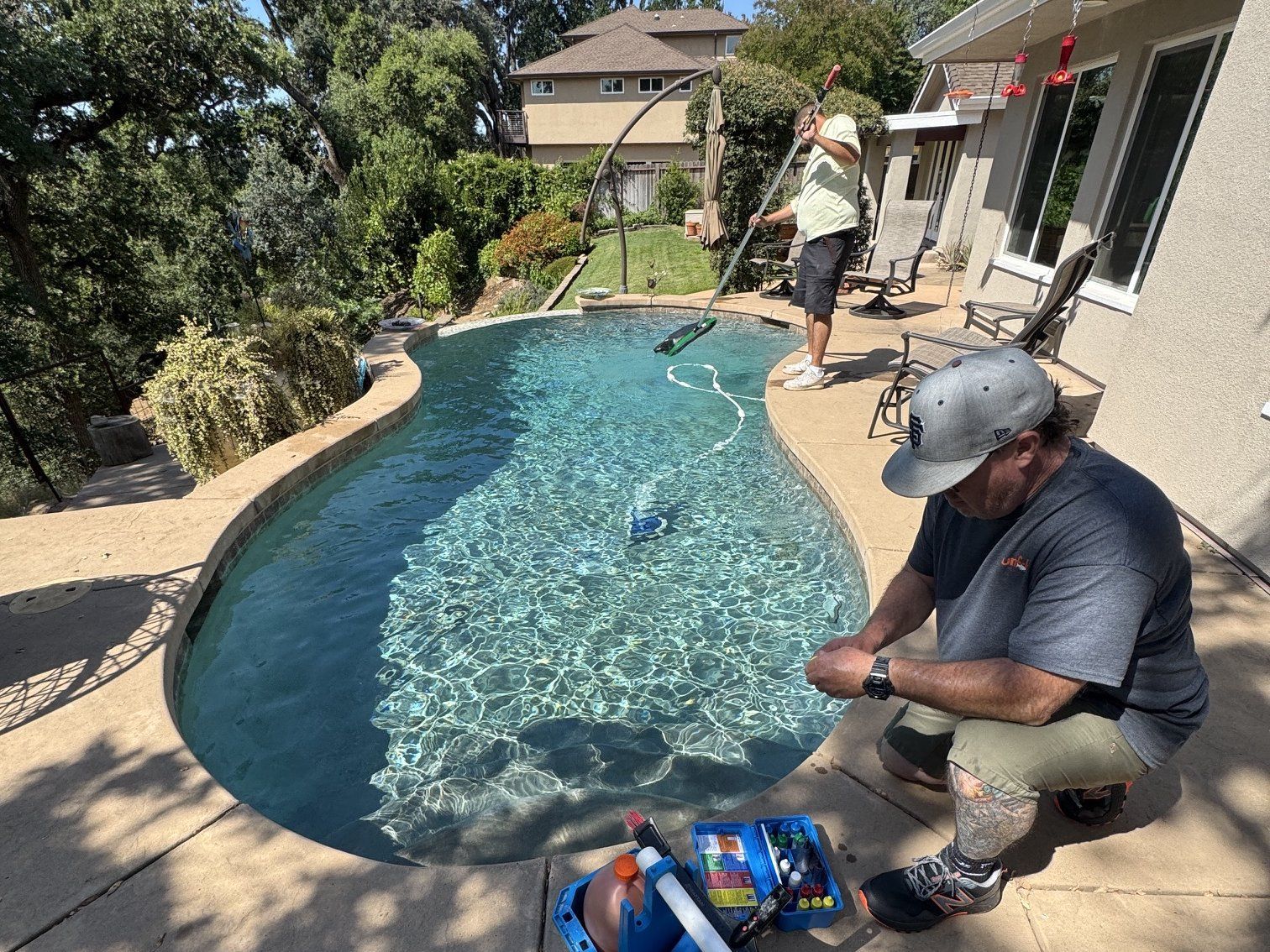
For our weekly customers, fall is the season where the service earns its keep. Every visit starts with the baskets and the pump pot, because a starved pump is the most expensive thing that can go wrong. Then the surface is netted, the bottom is brushed, the water is tested and balanced, and the filter pressure is checked so the filter gets cleaned when it needs it rather than on a fixed date. You get a text before we arrive, a photo of the pool when we leave, and a weekly report with the chemistry numbers so you can see the chlorine and pH holding through the drop.
Weekly service in the Sacramento area starts at $135 a month. If the leaves have already gotten ahead of you, or the pump and filter need attention before the drop,
weekly pool service and
pool repair are the two places to start.