That white, crusty line around your pool at the waterline is calcium. It's the most common thing we get asked about on pool tile in Sacramento, and it doesn't come off with a pool brush. Here's what it is, what you can do about it yourself, and when it's a job for a machine.
What the white line actually is
Pool water carries dissolved calcium. At the waterline the water evaporates and the calcium stays behind on the tile. Our summers do the rest: long stretches of heat and a lot of evaporation, so the line builds a little every week. High pH and high calcium hardness make it build faster.
There are two kinds. Calcium carbonate is white and flaky, and it's the one you can sometimes work off yourself. Calcium silicate is grayer, harder, and has usually been there for years. If the scale doesn't react at all to a scale remover, it's probably silicate, and hand tools won't get you far.
What you can try yourself
A pumice stone. Keep the stone and the tile wet and rub lightly. It works on a light film in a small area on ceramic tile. Don't use it on glass tile, it will scratch. On a thick band around the whole pool, plan on hours of work and sore hands.
A tile scale remover. Pool stores sell products made for this. They soften light carbonate scale so it brushes off. Follow the label, wear gloves and eye protection, and expect to rebalance your water after, because whatever you put on the tile ends up in the pool.
What we'd skip. Straight muriatic acid on the tile, wire brushes, and scrapers. Acid eats the glaze along with the calcium and dulls the tile over time. Metal tools scratch the tile and chip the grout.
When it's a job for bead blasting
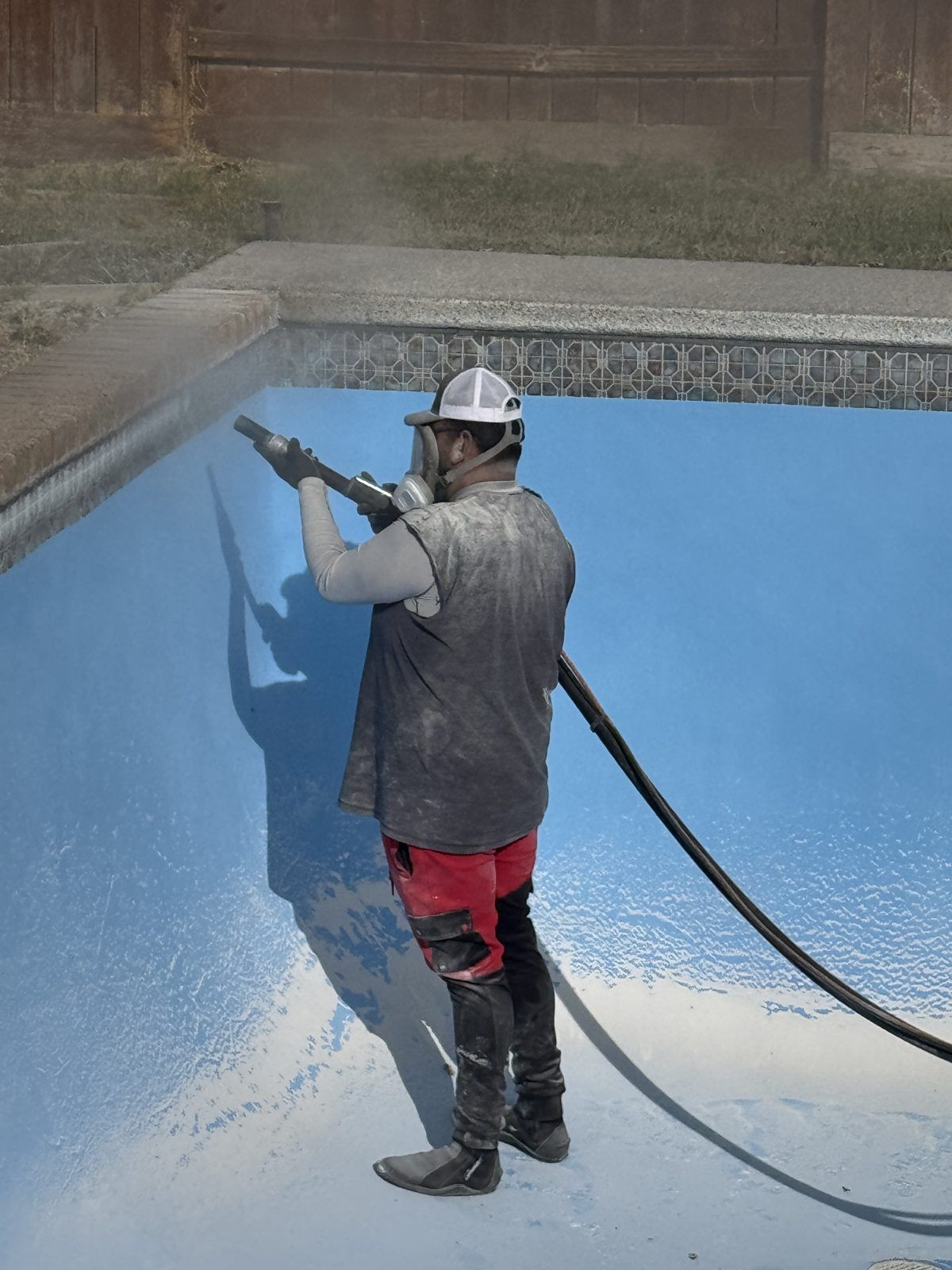
If the line is thick enough to feel with a fingernail, runs the whole way around the pool, or has been there for years, scrubbing isn't going to get it. That's what glass bead blasting is for. A machine puts fine glass bead on the tile at low pressure and lifts the scale off the surface without acid, so the tile keeps its finish.
That's how we do
pool tile cleaning in Sacramento. We lower the water below the tile line, check the tile and grout first, blast the calcium off, vacuum up the spent media, and refill the pool before we leave. You get before and after photos of the job.
How to slow it down after
The calcium comes back if the water stays out of balance. Three things slow it down.
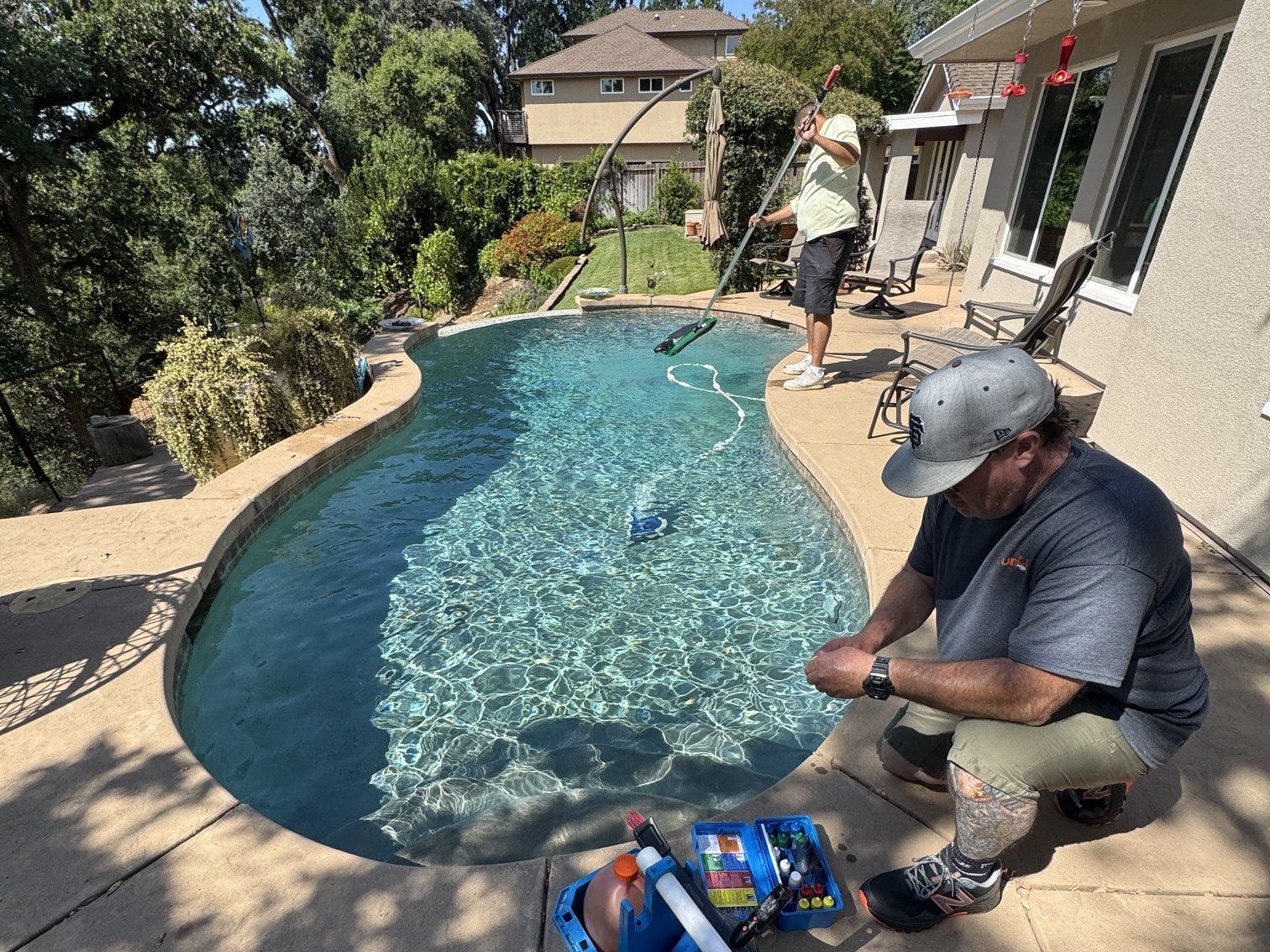
- Keep pH between 7.4 and 7.6. High pH is the biggest driver of scale.
- Keep an eye on calcium hardness. Evaporation concentrates it over the years, because topping off the pool adds more calcium and none of it leaves.
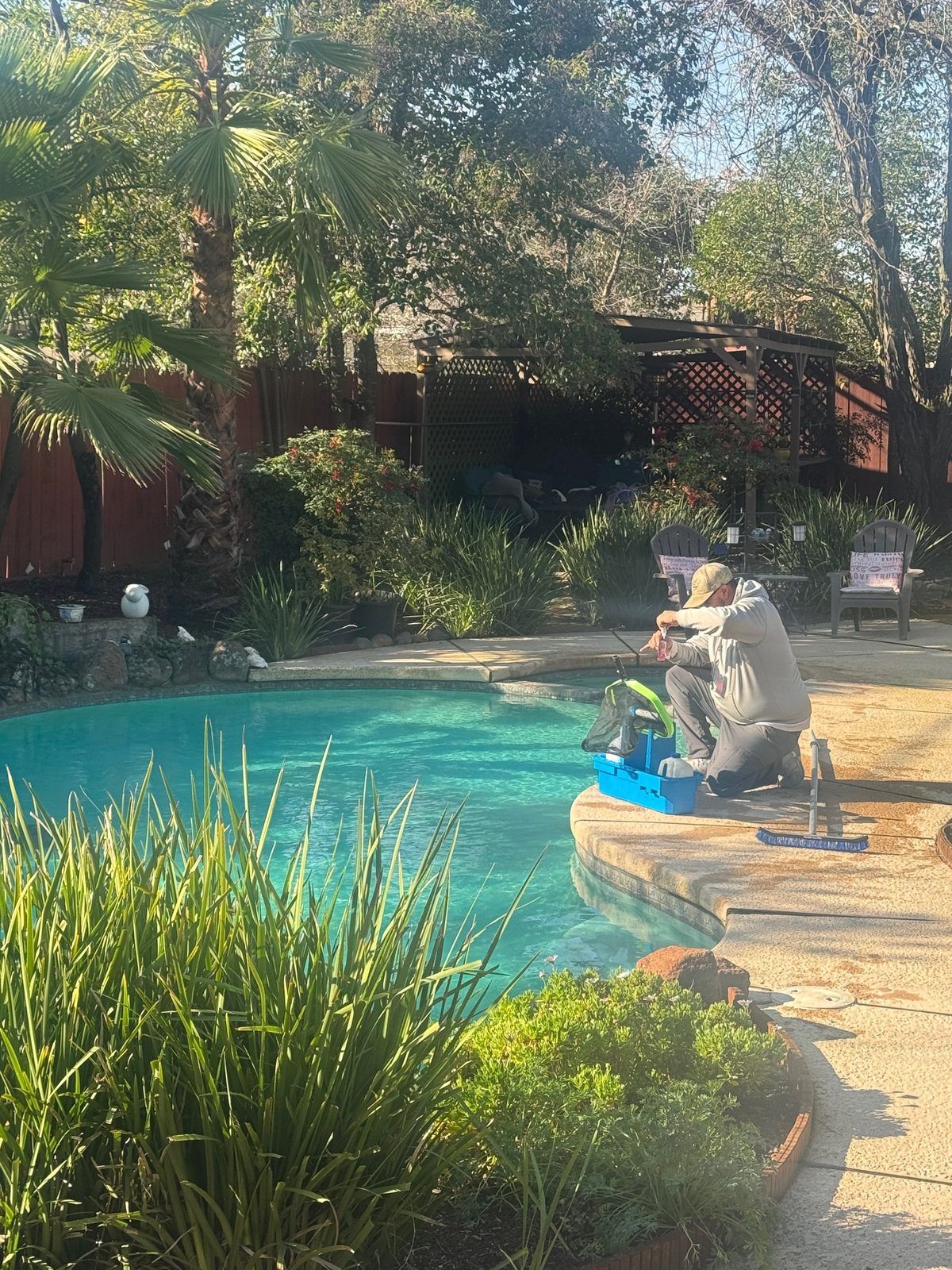
- Brush the tile line every week so a new film never gets the chance to harden.
If you want a price
Send us a couple photos of your waterline on the
tile cleaning page and we'll get you a price. You don't need to be a weekly customer.